


Cloud Hosting vs VPS Server
Choosing the right hosting solution is critical for your website’s performance, security, and Google ranking. Two popular options in today’s market are Cloud Hosting and VPS Hosting. While both use virtualization technology, they work very differently behind the scenes.
Let’s break it down clearly so you can decide which one fits your business.
Understanding the Basics: Virtualization and Cloud Technology


Modern hosting no longer requires you to buy physical servers, install operating systems, and manage hardware yourself. Thanks to virtualization, one physical server can be divided into multiple virtual environments.
Cloud infrastructure takes this a step further by combining multiple physical servers into a single resource pool. This improves reliability, scalability, and performance.
Now let’s compare both options in detail.
What Is VPS Hosting?
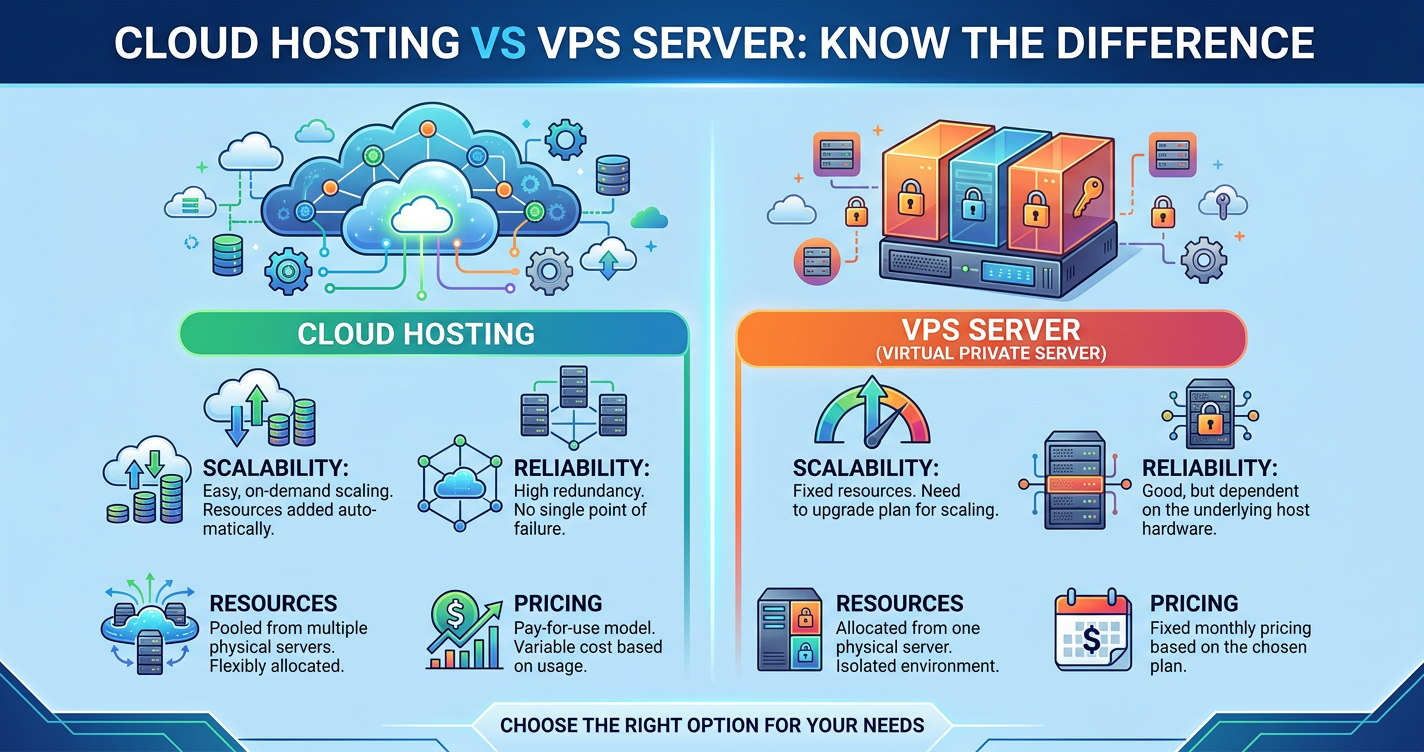
VPS (Virtual Private Server) hosting is created using virtualization technology. A single physical server is divided into multiple virtual servers, and each VPS gets dedicated resources like CPU, RAM, and storage.
It acts like a private server, even though it runs on shared hardware.
How VPS Works
- One physical machine
- Multiple virtual partitions
- Each user gets assigned resources
- Resources are isolated but still tied to the same physical hardware
If the main server experiences hardware failure, all VPS instances on that machine may be affected.
Benefits of VPS Hosting
- Full root access and control
- Install custom software
- More secure than shared hosting
- Dedicated resources (not affected by shared hosting traffic)
- Cost-effective alternative to dedicated servers
VPS hosting is suitable for developers, growing businesses, and websites that need more control than shared hosting.
Limitations of VPS Hosting
- Limited scalability compared to cloud
- If the physical server crashes, your VPS may go offline
- Resource upgrades may require downtime
- High traffic spikes can overload the server
VPS is powerful, but it still depends on a single machine.
What Is Cloud Hosting?
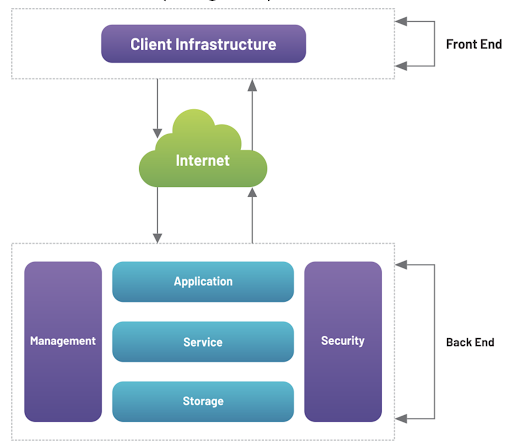

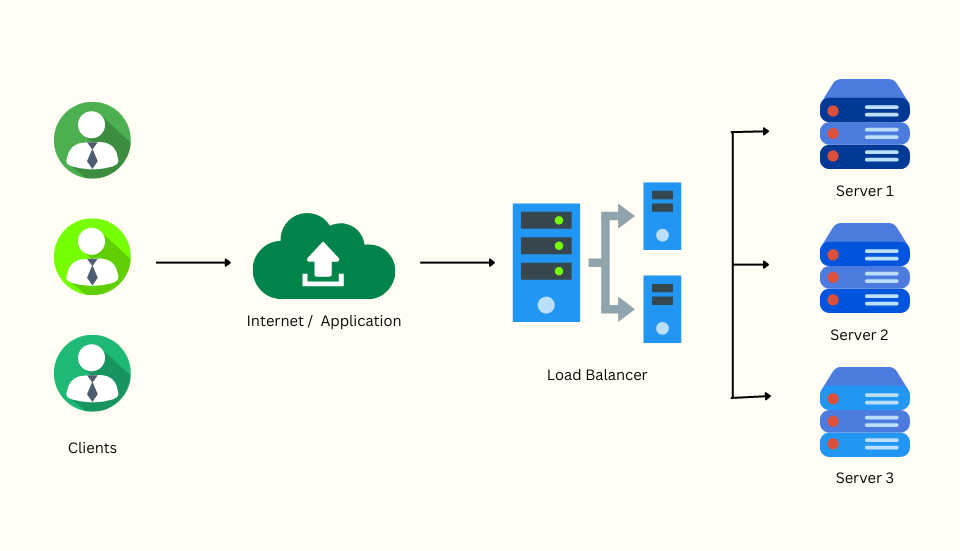
Cloud hosting runs your website on multiple connected servers instead of just one.
Your data is distributed across a cluster of servers. If one server fails, another instantly takes over. This ensures maximum uptime and performance.
Cloud hosting providers like Amazon Web Services helped popularize this scalable infrastructure model worldwide.
How Cloud Hosting Works
- Multiple physical servers connected together
- Resources pooled and distributed dynamically
- Automatic load balancing
- Failover protection
If traffic increases suddenly, cloud hosting automatically allocates more resources. If one server goes down, others continue serving your website.
Benefits of Cloud Hosting
- High reliability and uptime
- Auto scalability
- Pay-as-you-go pricing
- No single point of failure
- Handles traffic spikes easily
- Real-time resource upgrades
Cloud hosting is ideal for high-traffic websites, eCommerce platforms, SaaS applications, and businesses that need guaranteed performance.
Cloud Hosting vs VPS Hosting: Comparison Table
| Feature | VPS Hosting | Cloud Hosting |
|---|---|---|
| Infrastructure | Single physical server | Multiple connected servers |
| Scalability | Limited | Highly scalable |
| Uptime | Depends on one server | High availability |
| Resource Allocation | Fixed | Dynamic |
| Pay-as-you-go | No | Yes |
| Performance | Good | Excellent |
| Traffic Handling | Moderate | Handles spikes easily |
| Failure Impact | Server-dependent | Minimal impact |
Which Is Better for SEO and Google Ranking?
Website performance directly affects search engine ranking. Google considers:
- Page speed
- Uptime
- Server response time
- Stability
Cloud hosting generally provides:
- Faster loading speed
- Better uptime
- Improved reliability
- Better handling of high traffic
If your website crashes during peak traffic, it negatively impacts user experience and SEO performance.
For businesses focused on growth, cloud hosting offers stronger long-term advantages.
When Should You Choose VPS?
Choose VPS if:
- You need root access
- You run a medium-sized website
- Traffic is stable and predictable
- You want affordable dedicated resources
When Should You Choose Cloud Hosting?
Choose Cloud Hosting if:
- Your traffic fluctuates
- You expect rapid growth
- You need maximum uptime
- You run eCommerce or critical applications
- You want flexible scaling
Many modern hosting companies such as GotMyHost now offer both VPS and cloud solutions to match different business needs.
Why Cloud Hosting Stands Out Today
Cloud hosting is decentralized. That means no single hardware failure can bring down your website. You can increase RAM, storage, or bandwidth instantly without major downtime.
It’s flexible, scalable, and optimized for modern web applications.
As cloud infrastructure becomes more affordable, it is quickly becoming the preferred hosting solution for serious online businesses.
Final Thoughts
Both VPS and Cloud hosting are powerful solutions. The right choice depends on your website’s size, traffic expectations, and growth plans.
If you need stable performance with limited traffic, VPS can work well.
If you want scalability, high uptime, and better SEO performance, Cloud hosting is usually the smarter long-term investment.
Choosing the right hosting today can directly impact your website speed, user experience, and Google ranking tomorrow.