

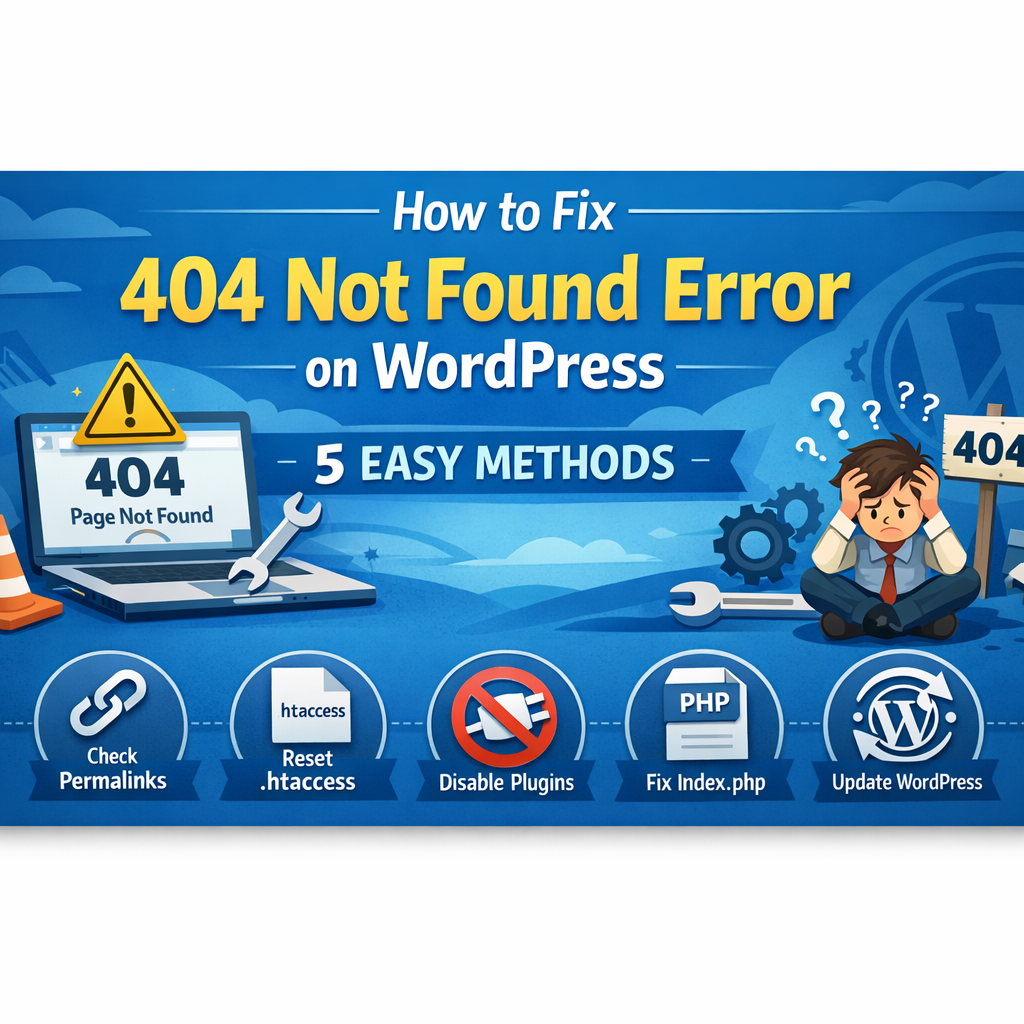
A 404 error on your WordPress site can be stressful. It stops visitors, breaks essential pages, and hurts your search ranking. 404 error means WordPress cannot find the page or file someone is trying to open. This can happen for many reasons, such as wrong permalinks, deleted pages, plugin updates, theme changes, or even a recent migration.
For a website owner, this is more than just a minor annoyance. A 404 error can damage your SEO rankings and lead to lost sales. If your visitors are seeing this error on your WordPress site, it usually means that while the server is reachable, the specific page they are looking for cannot be found.
The good news is that fixing a 404 error in WordPress is simple when you know what to check. In this guide, you will learn how to fix 404 errors on pages, posts, the homepage, and the entire site. Here are five easy methods to get your site back on track.
What causes 404 errors in WordPress?
A 404 error shows up when WordPress cannot find the page someone is trying to visit. This happens more often than you think, and the reasons are usually simple.
Here are the most common causes:
- Wrong permalink settings: If your permalink structure breaks, WordPress fails to load the correct URL. This is the most common reason for 404 errors.
- Deleted or moved pages: Maybe the page was removed, renamed, or placed in a different location. The old link will then show a 404 error.
- Changed slugs or URLs: If you update a page or post slug, all old links point to a missing address.
- Plugin conflicts: Some plugins change URL rules or rewrite settings. After an update, this can break links across your site.
- Theme issues: A new theme may use different templates or URL structures. This can lead to missing pages or broken routes.
- Corrupted .htaccess file: If the .htaccess file breaks or resets, WordPress URLs stop working.
- Website migration or domain change: Moving your site to a new domain, host, or folder often causes mismatched URLs.
- Cache problems: Your browser or site cache may still be holding old URLs that no longer exist.
Method 1: Fix 404 error on WordPress Pages and Posts
The most frequent cause of 404 errors across an entire WordPress site is a glitch in the permalink structure. This often happens after installing a new plugin or updating your site.
How to do it:
- Log in to your WordPress Dashboard.
- Go to Settings > Permalinks.
- Scroll to the bottom and click Save Changes.
- You do not need to change any settings; simply clicking “Save” flushes the rules and regenerates your links.

Method 2: Restore the Default .htaccess File
If the first method didn’t work, your .htaccess file might be corrupted. This file acts as a set of instructions for the server on how to handle your site’s URLs.
How to do it:
- Connect to your server using the Gotmyhost File Manager or an FTP client.
- Locate the .htaccess file in your root folder.
- Rename the old file to .htaccess_old
- Create a new file named .htaccess and paste the standard WordPress code:

Method 3: Deactivate Faulty Plugins or Themes
Sometimes a specific plugin or a newly installed theme can conflict with your URL structure, causing specific pages to return a 404 error.
How to do it:
- Go to Plugins > Installed Plugins.
- Deactivate your most recently installed plugins one by one.
- Check your “404 page” after each deactivation to see if the content reappears.
- If you recently changed your theme, try switching back to a default WordPress theme (like Twenty Twenty-Four) to see if the error persists.

Method 4: Set Up 301 Redirects
If you have moved a page or changed its URL slug, anyone clicking the old link will see a 404 error. The professional solution is a 301 Redirect, which automatically sends visitors from the old link to the new one.
How to do it:
- Install a plugin like Redirection.
- Enter the “Source URL” (the old, broken link).
- Enter the “Target URL” (the new, active link).
- Click Add Redirect.

At Gotmyhost, we recommend keeping an eye on your 404 logs within the Redirection plugin to catch broken links as they happen.
Method 5: Correct Broken Internal Links
Sometimes the 404 error isn’t a server issue at all—it’s a typo. If you manually typed a link in a blog post and missed a letter, your visitors will hit a dead end.
How to do it:
- Use a tool like the Broken Link Checker plugin or an online tool like Screaming Frog.
- These tools scan your site and list every link that returns a 404 error.
- Update the links in your posts to point to the correct URLs.
Conclusion
404 errors are common in WordPress, but they are easy to fix once you know where to look. Most issues come from broken permalinks, deleted pages, changed slugs, or updates that change how your site loads URLs.
By checking your links, setting proper redirects, and keeping your structure clean, you can prevent these errors from coming back.
Use the tools we shared to monitor your site and fix problems early. A site with fewer 404 errors loads better, ranks better, and feels more trustworthy for your visitors.
Need a Reliable Hosting Partner?
Dealing with technical errors is much easier when you have a support team behind you. At Gotmyhost, our servers are optimized to handle WordPress traffic seamlessly, reducing the chances of configuration errors. If you are a customer and still seeing 404 errors after trying these steps, our technical support is available 24/7 to help you investigate your server logs and find the root cause.
Related Topic: How to Fix WordPress JSON Response Error (Step-by-Step)
